

Total Items
0
0 Item(s)

High-intensity laser therapy (HILT) and LED-based red light therapy (RLT) are often grouped together under the umbrella of light-based therapy, known as photobiomodulation therapy (PBMT). While they both fall within this broader category of photobiomodulation (PBM), they are not interchangeable. HILT and RLT represent distinct approaches with different clinical capabilities and therapeutic outcomes.
PBM refers to the use of specific wavelengths of light both in the visible and near-infrared spectrum to influence cellular function, promote tissue repair, and alleviate pain. Both high-powered lasers and low-powered LEDs can be used to deliver PBMT, including red light wavelengths, but the differences in light source and energy output are clinically significant.
In the sections that follow, we'll explore how these therapies differ in terms of clinical application, treatment outcomes, and why HILT is the preferred choice for deeper, targeted interventions.
Here’s What You Really Need to Know
High-intensity laser therapy (HILT) uses targeted near-infrared laser light to deliver therapeutic energy deep into soft tissues, joints, and muscles. In contrast, red light therapy (RLT) typically uses low-powered LEDs that produce broader, more superficial effects.
Laser therapy is widely used in clinical settings to support musculoskeletal conditions, while red light therapy is more commonly found in wellness centers and at-home devices.
What Is High-Intensity Laser Therapy?
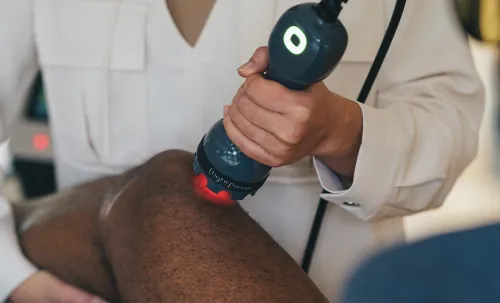
HILT uses Class IV medical lasers, like those developed by LightForce®, to influence cellular activity, promote circulation, and support the body’s natural recovery processes. LightForce® devices use near-infrared wavelengths (810nm, 980nm), which can penetrate deeply—up to several centimeters—into soft tissue. This makes them ideal for applications involving pain, muscle spasm, and joint stiffness.
What Is Red Light Therapy?
Red light therapy is a lower-powered form of PBMT that uses LEDs to emit red light (625-750 nm). These treatments are commonly marketed for cosmetic or wellness purposes.
While RLT may offer benefits such as improved skin health, hair growth, and pain relief, it lacks the power and tissue penetration necessary to impact deeper musculoskeletal structures. It is not generally designed for clinical use.
HILT vs RLT: Quick Summary
| Feature | High-Intensity Laser Therapy (HILT) | Red Light Therapy (RLT) |
|---|---|---|
| Light Source | High-power Class IV laser | Low-power LED |
| Penetration Depth | Up to 12 cm | Up to 0.5 cm |
| Clinical Use | Medical and rehabilitation settings | Home, spa, wellness |
| Power Output | 500mW – 40W (LightForce® XLi) | 10 – 500mW |
| Primary Purpose | Pain relief, recovery | Skin, hair growth, general wellness |
| Treatment Duration | Usually 2–10 minutes, depending on the treatment area | 10–30+ minutes |
| Results Timeline | Often noticeable after 1–3 sessions | May take weeks |
Why Laser Therapy Is Better for Deep Tissue Conditions
While both therapies use light to stimulation biological responses, laser therapy offers several clinical advantages:
This is why high-intensity laser therapy is commonly used in:
Why Choose LightForce® Lasers?
At LightForce®, we specialize in high-intensity laser therapy—backed by science and trusted by professionals. Our Class IV medical lasers are used by:
LightForce® Therapy Lasers are known around the world for innovative technology and evidence-based treatment solutions. With thousands of customers across the globe, Chattanooga® estimates over 1 million+ treatments are performed using LightForce® Therapy Lasers per month. LightForce® Therapy Lasers are unique among laser devices in having a singular focus in rehabilitation and pain management. Over 250 professional and college sports teams trust LightForce® Therapy Lasers for their athletes.¹
Take the Next Steps Toward Real Relief
If you’re looking for results beyond what over-the-counter wellness tools can offer, it’s time to explore the advantages of high-intensity laser therapy with LightForce®.
Schedule a demonstration with your local territory manager today.
References:
¹ Figure based on LightForce® customers in the professional, college, and Olympic sports industries.