

Total Items
0
0 Item(s)


Studies
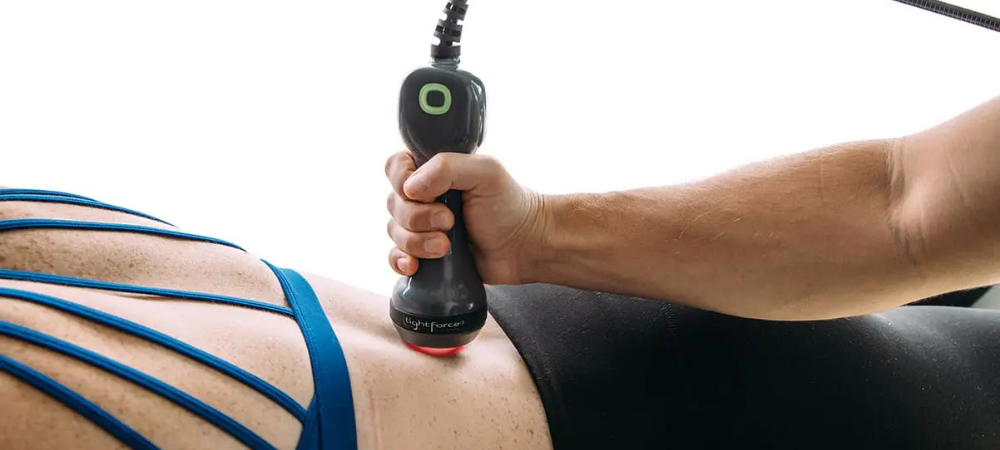
Short-Term Effects of High-Intensity Laser Therapy Versus Ultrasound Therapy in the Treatment of Low Back Pain: A Randomized Controlled Trial30 consecutive patients with clinically verified sub-acute or chronic low back pain were randomized to receive 15 treatments (5 days a week for 3 weeks) of either ultrasound or laser therapy. Ultrasound was administered at 1MHz for 10 minutes. 2600 J of laser therapy was administered to the same treatment area over 10 minutes. The laser therapy group “showed a statistically significant reduction of Visual Analog Scale pain and Oswestry Low Back Pain Disability Questionnaire scores with respect to Ultrasound at the end of treatment (P<0.005)” Download

Studies
Efficacy of Low-Level Laser Therapy in the Management of Neck Pain: A Systematic Review and Meta-Analysis of Randomised Placebo or Active-Treatment Controlled TrialsReview of laser therapy for neck pain published in a top-tier medical journal. Sixteen RCTs including 820 individual patients were included in the review. Laser therapy was found to immediately reduce neck pain and maintained results up to 22 weeks after completion of treatment. Also, most statistical heterogeneity disappeared when Chow excluded studies with small doses or flaws in treatment procedure.

Studies
Effect of Diode Laser in the Treatment of Patients with Nonspecific Chronic Low Back Pain: A Randomized Controlled TrialStudy to evaluate pain reduction efficacy of treatment with GaAlAs laser (980 nm) with a large diameter spot size combined with exercise. The study evaluated 100 patients with chronic low back pain. At the end of the 3 week period, the Laser + exercise group showed a significantly greater decrease in pain than did the sham + exercise group. Download
Studies
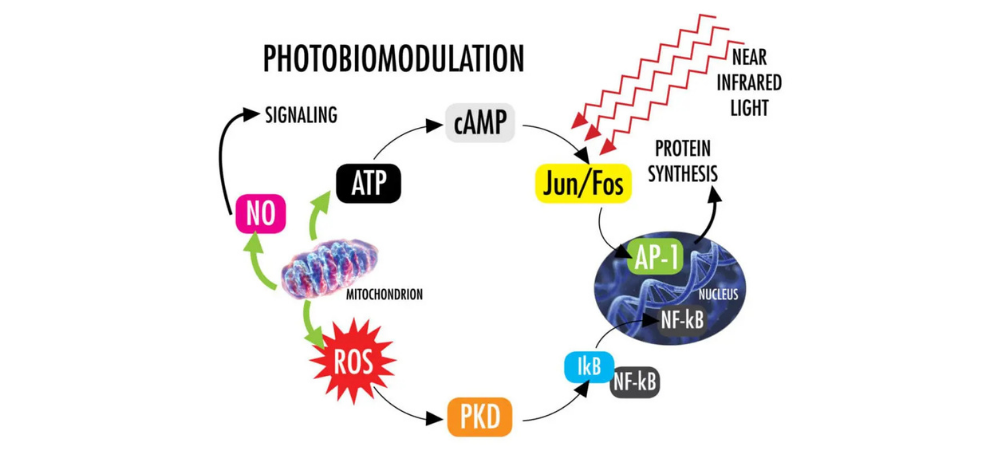
Biphasic Dose Response in Low Level Light Therapy (Includes Update)This review paper covers the current theory on basic mechanisms of laser therapy and discusses the effects of different dosing strategies. Cytochrome c is identified as the primary absorber of light in the near infrared leading to cellular changes related to ATP, NO and ROS levels. Different doses of laser therapy are shown to either stimulate or inhibit multiple metabolic and cell signaling pathways. ORIGINAL STUDY: https://www.ncbi.nlm.nih.gov/pmc/articles/PMC2790317/ Published: Dose-Response. 2009; 7(4): 358–383. doi: 10.2203/dose-response.09-027.Hamblin UPDATE: Update on review paper for bi-phasic dose response. Published: Dose-Response. 2011; 9: 602-618. doi: 10.2203/dose-response.11-009.11-009.Hamblin
Studies
Ga-As (808 nm) Laser Irradiation Enhances ATP Production in Human Neuronal Cells in CultureNormal human neural progenitor (NHNP) were grown in tissue culture and were treated by Ga-As laser (808 nm, 50 mW/cm2, 0.05 J/cm2), and adenosine triphosphate (ATP) was determined at 10 min after laser application. The quantity of ATP in laser-treated cells was was significantly higher than the non-treated cells. The authors conclude that laser application to NHNP cells significantly increases ATP production which may explain the beneficial effects of low-level laser therapy (LLLT) in stroked rats. Download
Studies
Mechanisms of Low Level Light TherapyThis review paper covers the current theory on basic mechanisms of laser therapy. Cytochrome C oxidase is identified as the primary absorber of light in the near infrared leading to cellular changes related to ATP, NO and ROS levels. The “optical window” for tissue penetration is identified from 600 nm to 1.4 mm. A review of animal and clinical studies is also presented for applications including wound healing, nerve regeneration and numerous musculoskeletal conditions. Download
Studies
Quantitative Analysis of Transcranial and Intraparenchymal Light Penetration in Human Cadaver Brain TissueThis study investigated the light penetration gradients in the human cadaver brain using a Transcranial Laser System with a 30 mm diameter beam of 808 nm wavelength light. In addition, the wavelength dependence of light scatter and absorbance in intraparenchymal brain tissue using 660, 808, and 940 nm wavelengths was investigated. Transcranial application of 808 nm wavelength light penetrated the scalp, skull, meninges, and brain to a depth of approximately 40 mm. No differences were observed in the results between the PW and CW laser light. Transcranial light measurements of unfixed human cadaver brains allowed for determinations of light penetration variables. Comparisons of light scatter and penetration and estimates of fluence levels can be used to establish further clinical dosing. The 808 nm wavelength light demonstrated superior CNS tissue penetration.

Studies
Short-Term Effects of High-Intensity Laser Therapy Versus Ultrasound Therapy in Treatment of People with Subacromial Impingement SyndromeRandomized controlled trial of laser therapy vs. therapeutic ultrasound in 70 patients with clinically verified subacromial impingement syndrome. Laser therapy was shown to have significantly greater benefit than ultrasound in reducing pain and improving the articular movement, functionality and muscle strength of the affected shoulder.
Studies
Phototherapy Promotes Regeneration and Functional Recovery of Injured Peripheral NerveThis review presents several studies that evaluate the efficacy of laser therapy to promote regeneration and recovery of injured peripheral nerve. Studies include a crush injury model of the rat facial nerve, injured rat sciatic nerve and regeneration after surgical repair. All studies demonstrated the efficacy of laser therapy for treating nerves and the technique was identified as “one of the most promising therapies to date” for these difficult pathologies. Download
Studies
Correction for Santamato, Solfrizzi, Panza, et al. “Short-term effects of high-intensity laser therapy versus ultra-sound therapy…”Correction for Santamato, Solfrizzi, Panza, et al. “Short-term effects of high-intensity laser therapy versus ultra-sound therapy…” Phys Ther. 2009; 89:643-652. Original post