

Total Items
0
0 Item(s)
The field of photobiomodulation (PBM) therapy is continually evolving. Each PBM discovery made adds to our collective understanding of this promising modality and moves us one step closer to realizing its full therapeutic potential.
In this webinar, Brian Pryor, PhD, will present a sampling of the latest findings in PBM research and discuss their impact on the field. Starting with an overview of each study, followed by a discussion of its relevance, attendees will leave with a strong grasp of the current state of PBM research.

As the most common type of diabetic neuropathy, peripheral neuropathy (PN) is estimated to affect more than 20 million people in the US alone. For patients suffering with this painful condition, treatment options are limited, especially for those seeking alternatives to medication and surgery.
In this webinar, learn how one recent randomized, double-blind, sham-controlled pilot study has identified a promising new treatment - laser therapy. Non-invasive, fast-acting and long-lasting, laser therapy was shown to "significantly reduce pain and improve the overall quality of life of older adults with painful diabetic peripheral neuropathy."
Key Talking Points:
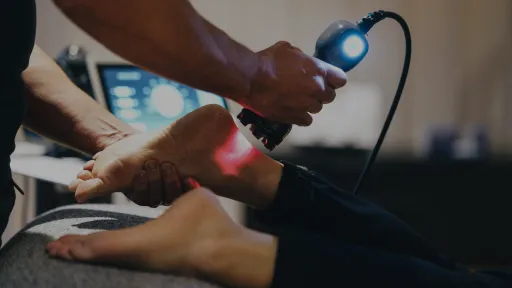
Building upon years of research in photobiomodulation (PBM), the latest clinical findings increase our collective understanding of this promising treatment and further the science behind dosing and protocols.
Join Brian Pryor, PhD, in this engaging webinar taking a deeper dive into recent studies regarding the depth of penetration and determining the optimum dosing recommendations. Attendees will leave with a greater understanding of the most recent science behind treatment protocols as well as current findings supporting the effectiveness of PBM for decreasing pain and improving mobility.
Review of Photobiomodulation Basics and Class IV Lasers.
If you are curious or new to laser therapy, the different applications and types of lasers can be confusing to navigate. Understanding the photobiomodulation (PBM) process at a cellular level and the role that higher powered Class IV lasers play in achieving outcomes is essential in determining the right laser for your practice.
Join Mark Callanen, PT, DPT, OCS, as he presents on the science behind laser therapy, types of Class IV lasers, and the medical applications for this emerging modality.

When it comes to laser therapy, there is a lot of misinformation surrounding the technology. It can be difficult for clinicians to sift through the claims to find what stands up to the scientific evidence and what clearly falls short.
Who better to debunk the myths than a clinical research scientist in the field of photobiomodulation (PBM*)? LightForce's own Director of Photobiomodulation, Ann Ketz, brings her years as a researcher in the field of laser therapy to help clear the air and lay out the facts regarding some of the most common myths. During this webinar you will learn what's fact and fiction as we dive into:
*PBM is the name for the process of focused laser light entering the tissue and interacting at the cellular level to trigger a biological cascade of events that leads to an increase in cellular metabolism and a decrease in both pain and inflammation).

According to the National Health Interview Survey conducted by NCHS in 2019, one out of five adults in the US have experienced chronic pain within the last three months.¹ Rehabilitation clinicians have long been sought after to help provide relief to this population through addressing various aspects of their pain complaints. Non-surgical and non-pharmaceutical solutions to reduce pain have become more important than ever in light of the recent opioid epidemic.
Laser therapy brings an evidence-based treatment option to rehabilitation practices that work daily to decrease pain. Therapeutic laser treatments promote photobiomodulation which impacts pain in a number of ways, increases cellular metabolism, and improves microcirculation to injured tissue.2-8 In this webinar, participants will learn about the mechanisms that make laser therapy an effective treatment for pain relief as well as the common applications where clinicians are experiencing desirable patient outcomes.
Join host, Mark Callanen, DPT, as he unpacks the science behind laser therapy and the studies proving its efficacy in the clinic.
1. Zelaya C, Dahlhamer J, Lucas J, Connor E. (2020, November 4). Products - Data briefs - Number 390 - November 2020. Centers for Disease Control and Prevention. https://www.cdc.gov/nchs/products/databriefs/db390.htm
2. Chow R, Armati P, Laakso E, Bjordal JM, Baxter GD. Inhibitory Effects of Laser Irradiation on Peripheral Mammalian Nerves and Relevance to Analgesic Effects: A Systematic Review. Photomedicine and Laser Surgery. 2011;11(10):1-17.
3. Duchesne E, Dufresne S, Dumont N. Impact of Inflammation and Anti-inflammatory Modalities on Skeletal Muscle Healing: From Fundamental Research to the Clinic. Physical Therapy. 2017;97(8):807-817.
4. Karu, T. (1991) “Low-Intensity Laser Light Action Upon Fibroblasts and Lymphocytes.” Ohshiro T, Calderhead RG, eds. (1991) Progress in Laser Therapy. (pp. 175-180) Chichester, New York: John Wiley and Sons.
5. Stein A, Benayahu D, Maltz L, Oron, U. Low-Level Laser Irradiation Promotes Proliferation and Differentiation of Human Osteoblasts in Vitro. Photomedicine and Laser Surgery. 2005;23(2):161-166.
6. Mvula B, Mathope T, Moore T, Abrahamse H. The effect of low level laser therapy on adult human adipose derived stem cells. Lasers in Medical Science. 2008;23(3):277-252.
7. Dube A, Bansal H, Gupta PK. Modulation of macrophage structure and function by low level He–Ne laser irradiation. Photochemical and Photobiological Sciences. 2003;2:851-855.
8. Holanda VM, Chavantes MC, Wu X, Anders JJ. The Mechanistic Basis for Photobiomodulation Therapy of Neuropathic Pain by Near Infrared Laser Light.
Individual results may vary. Neither DJO, LLC nor any of its subsidiaries dispense medical advice. The contents of this webinar do not constitute medical advice. Rather, patients must consult with their healthcare professionals for information on the courses of treatment, if any, which may be appropriate for them.

Building upon years of research in photobiomodulation (PBM), the latest clinical findings increase our collective understanding of this promising treatment and further the science behind dosing and protocols.
Join Brian Pryor, PhD, in this engaging webinar taking a deeper dive into recent studies regarding the depth of penetration and determining the optimum dosing recommendations. Attendees will leave with a greater understanding of the most recent science behind treatment protocols as well as current findings supporting the effectiveness of PBM for decreasing pain.
Building upon years of research in photobiomodulation (PBM), the latest clinical findings increase our collective understanding of this promising treatment and further the science behind dosing and protocols.
Join Brian Pryor, PhD, in this engaging webinar taking a deeper dive into recent studies regarding the depth of penetration and determining the optimum dosing recommendations. Attendees will leave with a greater understanding of the most recent science behind treatment protocols as well as current findings supporting the effectiveness of PBM for decreasing pain and improving mobility.
Come and join us for one of our highly popular recurring webinars! Enhancing our collective knowledge base relies on being well-informed about the latest research in photobiomodulation (PBM).
In this captivating on-demand webinar, Brian Pryor, PhD, delves into recent PBM studies published since 2022. The webinar explores various subjects, such as the impact of lasers on different tendinopathies, the effects of high intensity laser treatments on MSK dysfunction, and the effectiveness of using multiple wavelengths compared to a single wavelength for treating shoulder disorders.
By attending, you will gain a deeper comprehension of the most up-to-date literature, receive answers to frequently asked laser-related questions posed to Enovis' medical education team, and discover methods to achieve improved outcomes in pain reduction and mobility enhancement through the utilization of PBM.
Explore the forefront of photobiomodulation (PBM) research at your convenience with our on-demand webinar featuring Dr. Brian Pryor, Co-Founder of LiteCure™, and Mark Callanen, PT, DPT, OCS, Enovis™ Director of Clinical Education. Delve into cutting-edge insights on dosing, wavelength, and pain management, and gain practical strategies for integrating the latest PBM research into your treatment plans. Don't miss the opportunity to stay ahead of the curve in PBM evolution and enhance patient care with evidence-based practices.
Learning Objectives