
Why Patient Pathways Are Becoming a Focus in Modern Rehabilitation
Rehabilitation continues to evolve.
Across physiotherapy, sports medicine, chiropractic care, podiatry, and musculoskeletal practice, there is growing recognition that successful rehabilitation is rarely defined by a single intervention. Instead, outcomes are often influenced by how effectively assessment, education, exercise, technology, and ongoing support are combined throughout the patient journey.
As a result, the conversation around rehabilitation technologies is changing.
Rather than asking, "How do we use laser therapy or shockwave therapy?", many clinicians are increasingly exploring a different question:
"Where can these interventions add value within the rehabilitation journey?"
Looking Beyond Individual Treatments
Patients rarely experience care as a series of disconnected appointments.
From a patient perspective, rehabilitation is a journey that may include:
- Assessment and diagnosis
- Goal setting
- Education and reassurance
- Progressive rehabilitation
- Functional recovery
- Return to activity
- Long-term self-management
This perspective has encouraged greater interest in rehabilitation pathways, helping clinicians consider not only which interventions to use, but how those interventions fit together throughout recovery.
The Shift Towards Patient-Centred Rehabilitation
Contemporary rehabilitation increasingly emphasises patient-centred care and meaningful outcomes over individual interventions.
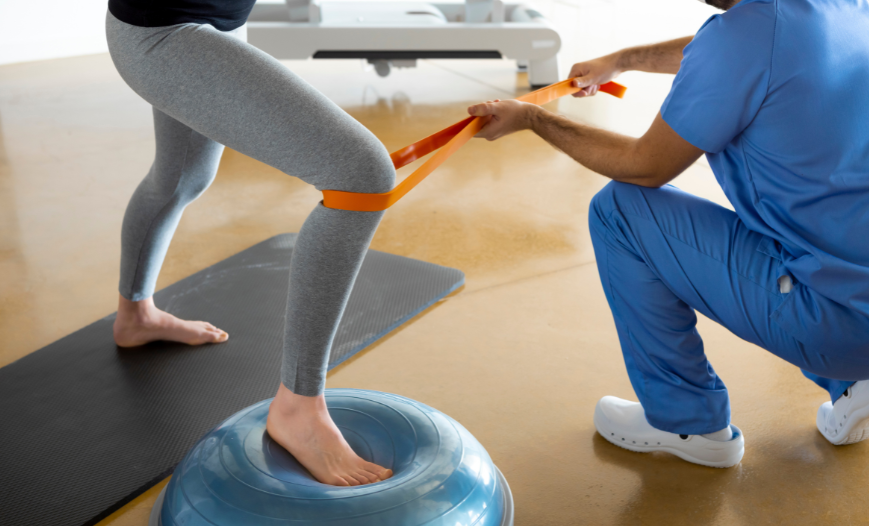
A widely discussed example is the PEACE & LOVE framework, proposed by Dubois and Esculier, which encourages clinicians to focus on education, active recovery, progressive loading, and long-term rehabilitation principles rather than relying on any single treatment approach.1
For many patients, success is not defined by a particular intervention.
Success is more commonly measured by outcomes such as:
- Returning to sport
- Returning to work
- Improving function
- Regaining movement confidence
- Managing symptoms independently
When viewed through this lens, technologies become one component of a broader rehabilitation strategy.
Where Advanced Modalities Fit Within Rehabilitation Pathways
Exercise-based rehabilitation remains central to musculoskeletal care.
At the same time, clinicians frequently encounter situations where additional support may help patients overcome barriers to progression.
Examples may include:
- Acute musculoskeletal injuries
- Persistent tendinopathies
- Post-operative rehabilitation
- Spine-related presentations
- Return-to-sport programmes
In these situations, advanced modalities may be integrated alongside exercise, education, and other evidence-informed interventions.
High-Intensity Laser Therapy
High-intensity laser therapy (photobiomodulation therapy) has been investigated for its role in supporting pain modulation and tissue repair within musculoskeletal rehabilitation. Research has demonstrated biological effects on mitochondrial activity and pain signalling pathways, supporting its use as an adjunctive intervention within broader rehabilitation programmes.² ³
Rather than replacing rehabilitation, laser therapy is often incorporated to help support rehabilitation progression while exercise remains central to long-term outcomes.
Shockwave Therapy
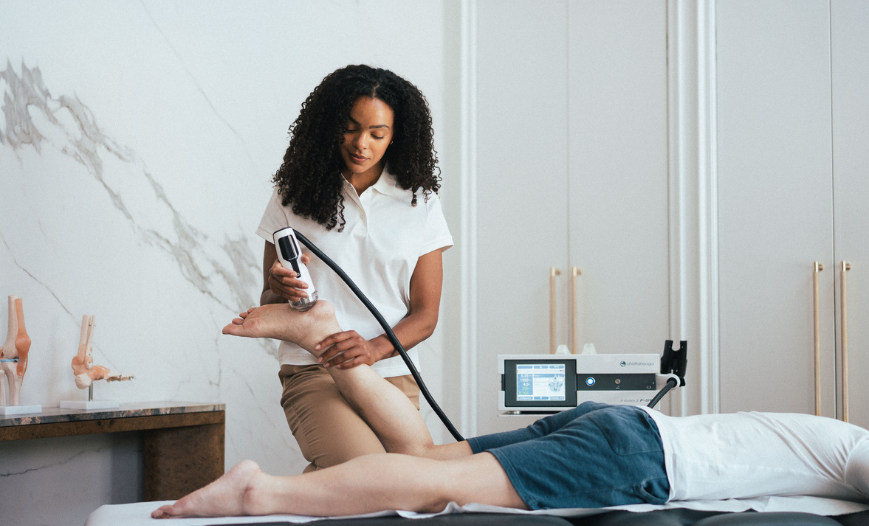
Shockwave therapy has become an increasingly established treatment option within musculoskeletal rehabilitation and is used across a broad range of clinical presentations. Through a process known as mechanotransduction, shockwave therapy delivers acoustic pressure waves that stimulate biological responses within tissue. Research supports its use across a range of chronic musculoskeletal presentations, including tendinopathies and plantar heel pain.⁴ ⁵
In many settings, shockwave therapy is integrated within exercise-led rehabilitation programmes to support loading progression and functional recovery.
Building Rehabilitation Pathways Around Patient Needs
One of the advantages of modern rehabilitation technologies is their flexibility across different clinical presentations.
Rather than creating services around individual interventions, many clinicians are increasingly developing pathways around patient goals and functional outcomes.1
For example:
Acute Injury Rehabilitation
A patient presenting with an acute sporting injury may require:
- Assessment and diagnosis
- Symptom management
- Progressive exercise rehabilitation
- Return-to-activity planning
Within this pathway, laser therapy may be incorporated alongside other interventions to support the overall rehabilitation process.
Tendinopathy Rehabilitation
Patients with persistent tendon-related symptoms may require:
- Education and load management
- Progressive exercise therapy
- Outcome measurement
- Functional progression
- Return-to-sport planning
Shockwave therapy is often utilised as one component of a structured rehabilitation strategy.
In both examples, the emphasis remains on patient goals and rehabilitation progression rather than any single intervention.
Measuring What Matters
One characteristic of pathway-based rehabilitation is a greater emphasis on outcomes that matter to patients.
These may include:
- Functional recovery
- Goal achievement
- Return to activity
- Movement confidence
- Rehabilitation adherence
- Long-term self-management
Monitoring these outcomes can provide valuable insight into pathway effectiveness while helping maintain focus on meaningful patient progress.
The Future of Rehabilitation
As rehabilitation practice continues to evolve, there is growing interest in how clinicians can combine expertise, education, exercise, technology, and outcome measurement into coordinated patient journeys.
While approaches naturally differ between clinicians, patient populations, and healthcare systems, one theme continues to emerge:
Patients are not seeking technologies. They are seeking solutions to their problems.
When advanced modalities are considered within a broader rehabilitation pathway, the conversation moves beyond devices and interventions alone and towards what matters most: helping patients progress confidently through rehabilitation and return to the activities that are important to them.
Explore Modern Rehabilitation Practice in More Detail
Interested in learning how advanced modalities can be integrated into patient pathways, patient engagement strategies, and long-term practice development?
📘 Download the eBook: The Modern Rehabilitation Practice
Discover practical insights on:
- Patient pathway development
- Clinical integration of advanced modalities
- Patient communication strategies
- ROI and business impact
- Lessons from successful clinics
Ready to explore advanced rehabilitation technologies for your clinic?
Learn more about Chattanooga's rehabilitation solutions or speak with our team.
🔗 View Laser Therapy Solutions
🔗 View Shockwave Therapy Solutions
🔗 Request a Demonstration
References
- Dubois B, Esculier JF. Soft-tissue injuries simply need PEACE and LOVE. Br J Sports Med. 2020;54(2):72-73.
- da Silva JP et al. Photobiomodulation therapy in musculoskeletal rehabilitation. 2023.
- Zupin L et al. Effects of laser wavelength on mitochondrial activity and pain pathways. 2019.
- d'Agostino MC et al. Mechanisms and clinical applications of shockwave therapy in musculoskeletal rehabilitation. 2015.
- Gollwitzer H et al. Extracorporeal shockwave therapy for plantar heel pain. 2015.